
Follow The Arc to Arcturus
Christine Olsenius
By Christine Olsenius
I owe a debt of gratitude to a park ranger who, many years ago, unlocked the intricacies of the night sky over Badlands National Park. Today, 40 years later, I can still find the constellations, Andromeda and Scorpio, and major stars like Antares and Sirius. But mostly I have never forgotten her instructions to look for the Big Dipper’s handle and “follow its arc to Arcturus,” one of the brightest stars in the evening sky.
The Badlands are located in South Dakota on 244,000 acres of rugged buttes, pinnacles, canyons, and rolling prairie grasslands that provide habitat for bison, prairie dogs and big horn sheep. It is an austere landscape chiseled by millions of years of wind and rain. But despite its name, I loved the Badlands for their severe, almost ascetic terrain and the endless prairie sky. Over the years I would leave the city to camp there and find some semblance of space and quiet amid the dramatic landscape. In addition, I was a fossil collector, (although NOT in national parks). And the Badlands are well known for rich fossil beds from the Oligocene and Eocene period of 20 -37 million years ago. That includes among others, the three-toed horse, rhinos, camels and saber-toothed cats. Touching a fragment of life from eons ago gave me a visceral connection to an ancient past.
Summer temperatures can be scorching in the Badlands and when the heat index was over 100 degrees it was wise to make use of the cooler mornings and evenings. So when a park ranger came through the campsites one day, inviting everyone to the evening star-gazing program, it sounded like the perfect activity; the opportunity to sit in bleachers on a warm summer evening and explore the sky.
So I waited for the sun to set, although in an area of endless sky, it takes longer than usual and as it does, it transforms the Badlands. As the sun lowers in the western sky the angled light illuminates the salmon, umber and beige colors in the layered rock formations showcasing their depth and texture that is lost in the glare of mid-day.
When darkness finally came, I packed my water bottle and flashlight and headed for the bleachers and the night sky program. With its remote location the Badlands offer exceptional stargazing. The park ranger used a laser to point out constellations, planets and the Milky Way. She told us all to find the Big Dipper and follow the arc of its handle to Arcturus, the fourth brightest star in the evening sky. There was a high powered telescope that provided a closer look at moon craters and the rings of Saturn. The ranger took us on a magical journey through the universe and it felt like I had a front row seat. I have been fascinated with stargazing ever since.
Some places touch you more than others, their memories stay buried somewhere in the mind or heart and that is what happened to me at the Badlands. Now, 40 years later after living on the East Coast with limited night sky views, I live in a Dark Sky community in the desert region of Arizona. Here star gazing is a popular pastime and I recently purchased a compact, smartphone-controlled telescope. It has automatic tracking, image stacking and basically helps novices like me, unlock the heavens with a user friendly interface. With it I can view images of galaxies and star clusters millions of light years away.
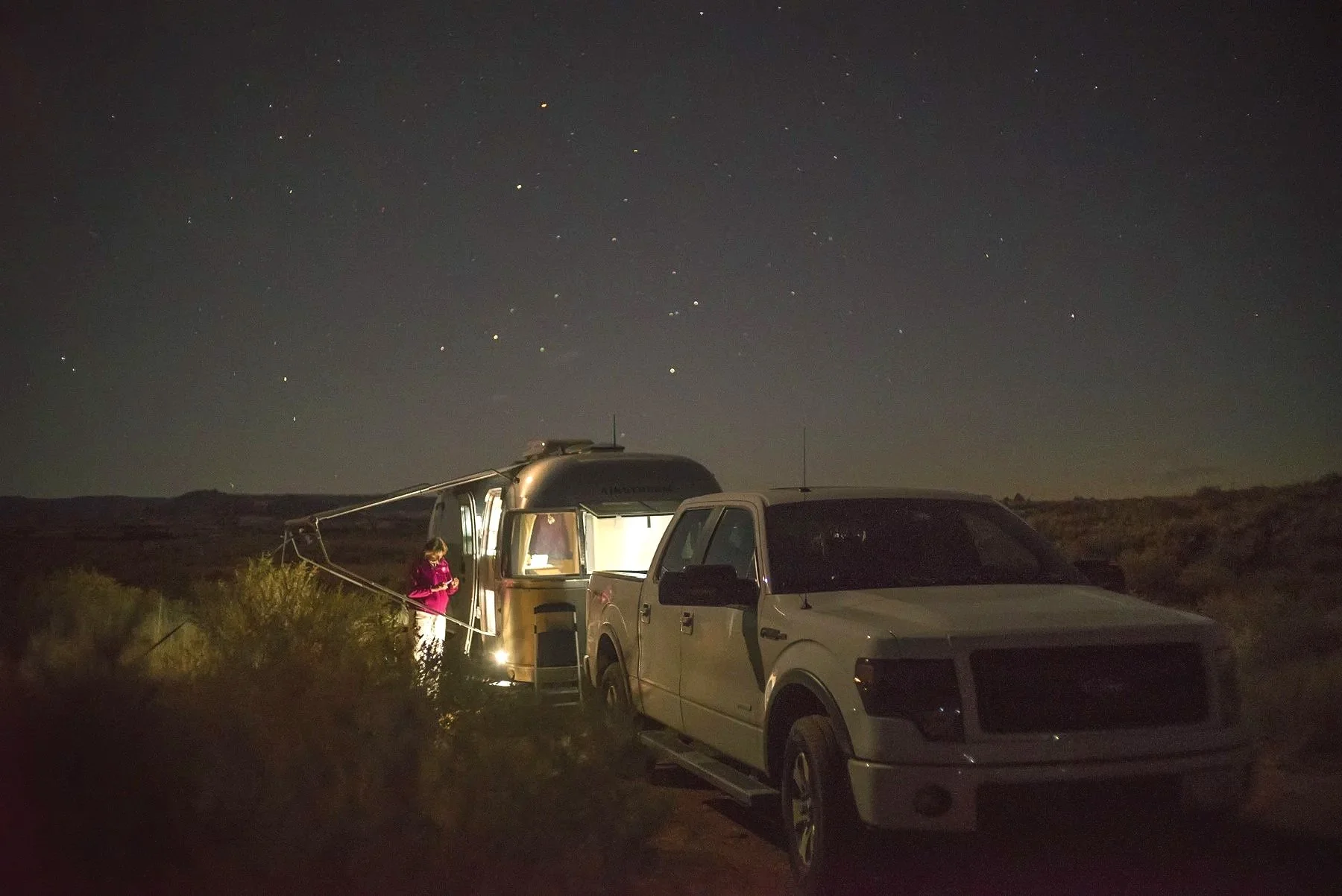
But every evening, just to get my bearings, I begin my star gazing by standing under the expanse of desert sky. I look for the handle of the Big Dipper and “I follow its arc to Arcturus” and it returns me to the wonder and fascination that one park ranger made me feel below that vast Badlands sky so many years ago.